Creativity as a skill is essential. It teaches kids to go beyond the box and look at new, novel ways to solve problems. Moreover, since young minds are more imaginative than adults, they are more likely to come up with new concepts.
We’re all familiar with the fact that learning to code helps kids learn logical and problem-solving skills. But do you know that one reason why coding is essential is that coding encourages kids to create innovative projects? Read on to know more about how this becomes possible.
Collaborative activity
When kids learn to code, they rarely do so in isolation. Kids need to communicate with each other regularly. For example, let’s take the case of a kid wishing to learn website development. Here, the kid will have to regularly interact with graphic designers, content writers, and digital marketers to determine the website’s layout, the elements required, the parts necessary for marketing (like call-to-action buttons), and so on. Hence, when the kid talks to other people in the company, many new concepts are exchanged, and coding makes kids more creative.
Makes kids confident
Coding knowledge allows kids to believe in themselves and that they shall be successful. When kids start writing and executing code projects in fields like website development or game development, they get the confidence to create new games, websites, etc. Once kids get the confidence required to excel in their field, they feel encouraged to continue developing new concepts each time.

Coding encourages both left and right brain thinking
Do you know the difference between the human brain’s left and right sides?
The left side of the human brain deals with logic, numbers, and calculations. On the other hand, the right side of the human brain deals with visuals. The left side of the brain involves a high level of analysis, and the right side of the brain tends to be creative.
Encourages self-expression
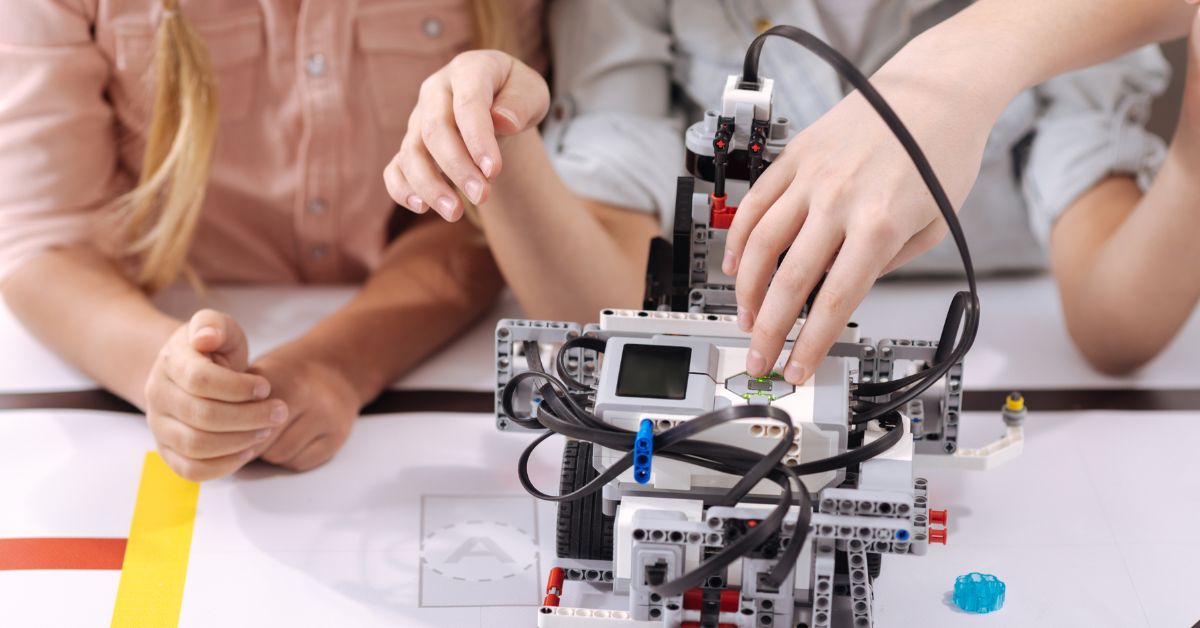
When kids learn to code, they look for new ways to solve problems. Hence, students can express their creativity by creating robots, aesthetic websites, and so on, encouraging them to showcase their personalities in the best possible way.
Students engage in non-monotonous activities
When students code, they are constantly engaged in multiple projects. Hence, the kid never works on a single monotonous task. Rather, they think about how different pieces of code will go well together to execute projects. Whether there are games or websites, there are many projects coding helps kids create.
We hope you’ve obtained knowledge about the reasons why coding helps kids become creative.
Did you enjoy reading this blog about why coding is important as it makes kids creative? Then, you may be interested in checking out this blog, ‘’How Does Learning to Code Have a Lifelong Impact On Kids?”