The 4 W’s of Coding

Posted on March 12, 2021March 31, 2022

1. What is coding?

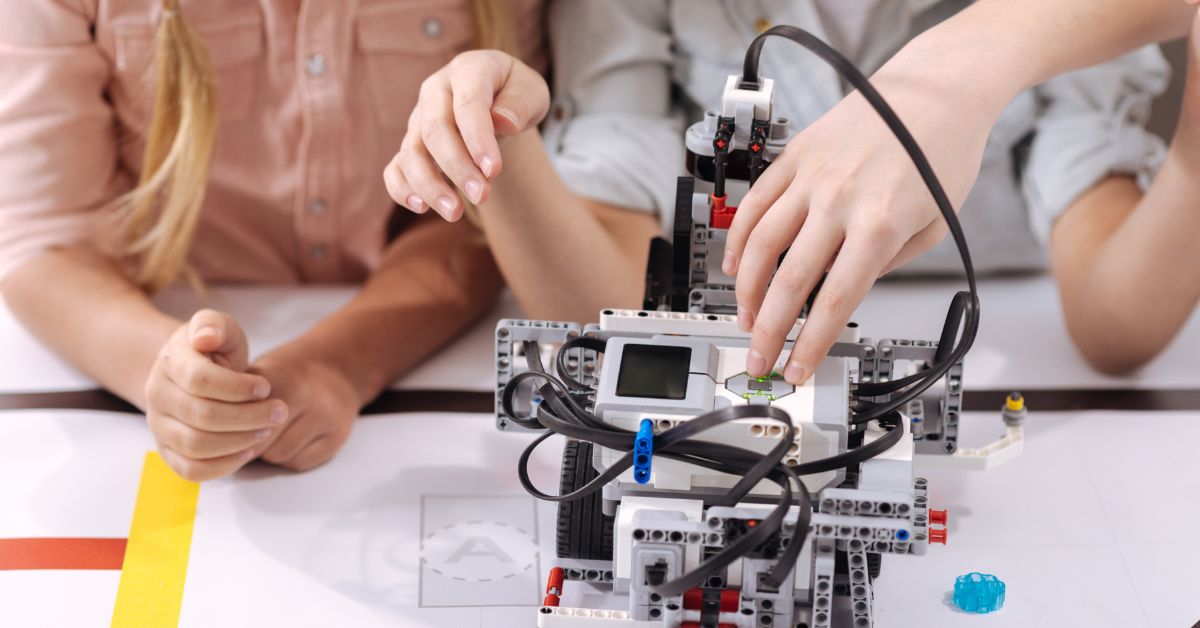
Technically, coding is a set of syntax rules that define how code should be written. It is a process where we use programming languages to make computers to do our tasks. Coding is an art of conveying human words to the language a computer understands. We use multiple programming languages for coding in creating softwares, applications etc. In simple words, the websites we visit, applications we use like Facebook, Instagram, Whatsapp and many. Coding is a vast topic, if you dive in this ocean once you will start exploring new things and the beauty of coding!

Coding is not memorizing a piece of code and executing it to get an output or it is not a course which we can complete in a week rather it is the process where we have to think, analyze the problem and come up with a proper solution to a particular problem. This enables us to tackle the problems we get and we will be ready to face the next ones which are coming.

2. Why coding?

We hear the word “coding” everywhere, but how many of us know why kids should learn coding. It’s not about learning to CODE – it’s about learning to THINK! If kids start learning to code at an early age then they develop the habit of questioning, finding solutions for the problems in their own way. This helps in the development of kids’ creative side, isn’t it?

We are living in an era where the world is dominated by digital technology. We just use the products and services of this digital technology without knowing how they work or how they are made, we fail to question the important things which we should know thinking it doesn’t make a difference. The concepts of Virtual Reality, Internet of Things, Artificial Intelligence, Machine Learning is changing the way we live now! Why should we not let our kids understand how these work, having basic knowledge in these things helps them in knowing them better as they grow. Let me take you a few decades back where computers were used only by professionals and computers were seen only in research institutes. But now, we see computers, laptops and tabs in almost every home. As time passed we have learnt using these devices and now we are letting our kids not only to use these devices and technology but also to know they actually work and how they have been created.


If we look at the long term benefits, having strong knowledge in basics at an early age helps the kids in understanding complex concepts easily in future. They can pursue coding as their career or as a hobby in future, finally it’s their choice and they have the freedom to choose! Currently there are around 2.75 million software engineers in India because there is a need for efficient and experienced software engineers because software companies are necessary to run this digital world!

3. Where coding started?

We all know Charles Babbage is the father of computer but do you know he was also a mathematician, philosopher, inventor and mechanical engineer. Ever wondered when the first higher level language originated? or who wrote the first line of code ever? If these questions sound interesting then go and start exploring. Most of the early programmers were great mathematicians, philosophers, inventors, analysts. If you see your kid interested or good in math, solving puzzles, quizzes and others. Then it’s a good time to teach them coding and if you read the first two W’s of coding you know what coding exactly is and why they should start learning to code.

WHY CODING

Late 1950s was the age where programming languages took birth and now we have hundreds of programming languages to learn. FORTRAN, COBOL, LISP were the early programming languages. Hundreds of software companies stood up giving jobs to thousands. Did you guys get the answers for your questions? If not, visit our website codingzen.in and we will try answering your questions.

4. Who can learn coding?

We say age is just a number and there is no restriction to learn the things we like no matter what age we are. Learning is an art and everyone creates their art uniquely. Kids are born creative, they like to explore things, they like to ask questions, they are masters of activeness, they grasp things quickly, they like to solve problems, quizzes, puzzles and do a lot of things which we cannot imagine. Do you think your child does one of these things then do not stop them, give them wings and make them fly towards the sky. Guide them, support them and help them in achieving their goals.

If they start early, they become masters. The more they spend time on something, the more they get to master things. Do not expect them to create magic in a short span of time, real magic takes time and you will see the results.

Similar Posts

Game Physics for Kids: How Do Video Games Make Movement Feel Real?

A character jumps across a platform, lands on the ground, and continues running. It looks effortless. But behind that simple movement, a game is performing calculations that determine how high the character jumps, how quickly it falls, and exactly when its feet touch the platform. These movements are not accidental. They are created through programming and mathematical rules. Understanding game physics for kids introduces an interesting connection between gaming, coding, and real-world science. For children who enjoy playing video games, discovering how movement works behind the screen can make game development an engaging learning experience. Instead of simply controlling a character, students begin understanding the rules that make the character respond. What Is Game Physics for Kids? Game physics refers to the mathematical rules and programming systems that simulate movement and physical interactions inside video games. In real life, objects respond to forces such as gravity and friction. Video games recreate selected aspects of these behaviours using calculations. For example, a game might need to determine: These behaviours are controlled through programming. However, game physics does not always need to imitate reality perfectly. A superhero might jump unusually high. A racing car might turn more sharply than a real vehicle. Developers adjust physical rules to create the experience they want players to have. How Does Gravity Work in Video Games? Gravity is one of the most recognisable concepts in game physics. When a character jumps, it initially moves upward, slows down, and eventually begins falling. In many games, this effect is created by changing the character’s vertical velocity over time. Velocity describes how quickly an object moves and in which direction. Gravity changes that velocity, causing the character to accelerate downward. A Simple Example of Coding Gravity Imagine a game character standing on a platform. When the player presses the jump button, the program gives the character an upward velocity.

Pseudocode for Kids: Why Learning to Plan Before Coding Makes a Difference

Your child sits down to build a simple program. They know what they want it to do, but after writing a few lines of code, they get stuck. The problem might not be the programming language. It could be that they haven’t decided exactly how the program should work. This is where pseudocode for kids becomes a useful learning tool. Pseudocode helps students organise their ideas into clear instructions before translating them into actual programming code. Instead of immediately worrying about brackets, spelling or syntax, children can focus on the logic behind their solution. For parents exploring coding education, understanding pseudocode offers a useful perspective on what happens before a successful program is written. What Is Pseudocode in Coding? Pseudocode is a simplified way of describing the steps a computer program should follow. It uses ordinary language combined with basic programming concepts such as conditions, repetition and instructions. Unlike Python, JavaScript or other programming languages, pseudocode cannot be executed directly by a computer. Its purpose is to describe the logic of a solution clearly enough that someone can later convert it into working code. For example, imagine a program that checks whether a student has completed their homework. The pseudocode could look like this: This example introduces a conditional statement without requiring the child to memorise the syntax of a particular programming language. Educational resources from Oak National Academy also describe pseudocode as a language-independent way of representing algorithms.  Oak National Academy Why Should Children Learn Pseudocode Before Writing Code? Writing instructions before coding encourages children to separate two different challenges: deciding what a program should do and learning how to express those instructions in a programming language. 1. It Helps Children Organise Their Thinking A programming idea may seem simple until a student tries to explain every step. Consider a program that recommends an activity depending on the weather. The child needs to decide what information the program receives, what conditions it checks and how it selects an answer. Pseudocode provides a structure for arranging these decisions logically. 2. It Makes Programming Logic Easier to Examine Imagine a child designing a program that checks whether someone qualifies for a library membership. Before writing code, they need to decide what happens when the user meets the requirements and what happens when they do not.

logo think create apply new 2 2048x525 1
Group 271
Group 545 4
Group 270

Launching New
3D Unity Course