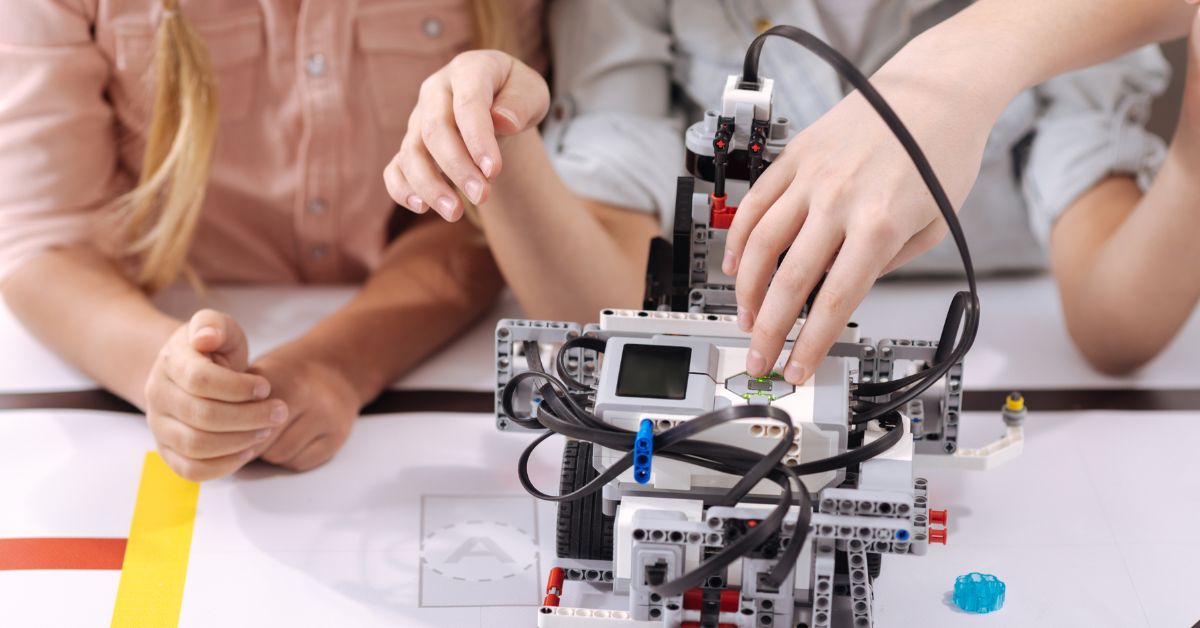
Competitions are one of the best ways for young ones to improve their skills. In a coding competition, a contestant is tested with a game or website development project. The contestant who can apply their coding knowledge to practise and create something innovative wins the coding competition. Coding contests can be organised for kids with varying coding skills: beginner, intermediate, and advanced level.
Let’s learn about the benefits of coding competitions.
Encourage Kids To Improve Their Skill Set
While a kid does improve coding skills through a teacher or a workshop, a coding competition can further sharpen their skill set over what they have learnt. Coding competitions enable kids to view and analyse the work of others, contrary to them working alone on coding projects.
Coding knowledge will help the young ones in their professional life as well. For example, if a student learns website development at a very young age. Then, the kid has the necessary experience to launch a startup after a few years. The students learn to promote products/services they offer to their target audience using a website. Moreover, a person who wants to enrol in a college/university and has been actively participating in competitions will also have a competitive advantage during the university application process. Students who regularly participate in school competitions are also likely to participate in college competitions.
Improve Problem-Solving Skills
During a coding competition, candidates may be given a specific project to execute. It may be a website, game, mobile application, or another coding-related task. While writing the code to execute the project, the child will have to revisit his/her written code and modify it multiple times. By editing the code repeatedly, kids will improve their problem-solving skills.

A student has to work and execute a coding project within a specified time frame. It makes them understand the importance of adhering to set deadlines. Additionally, when a student needs to work on a project, they must learn to bounce back from failures. Coding encourages students to have a growth-oriented mindset where they bounce back from failures and aim to be successful.
Encourage Creativity and Innovation
Sometimes, coding requires starting a completely new project from scratch. Many syntaxes must be written, from beginning to writing the program to finally executing it. While coding, creativity is necessary to develop new ideas and approaches to solve problems. For example, several lines of code may not fit together in a specific way. The learning child will have to write codes keeping in mind the limitations that may exist in the coding process. Additionally, aesthetic components of gaming and website development projects like game characters, website layout, and website colour scheme need to be determined.
Children are exposed to student projects in coding competitions, encouraging them to be creative after seeking inspiration. Coding contests for beginners further motivate them to make use of more innovative ideas, as and when kids’ coding knowledge improves.
Improve Concentration Abilities
When kids code, they must repeatedly write many lines to execute a project, like in a game, website, mobile app, etc. Hence, children can improve their concentration skills, as they have to focus on every character or letter they type. Similarly, when a kid participates in a competition, they must focus on the given task.

Improve Memory
Students must regularly practise coding skills to quickly develop projects when participating in coding or programming competitions. Hence, over time, a learning child improves his/her memory of coding knowledge. It will not only enhance the child’s memory, but it will also help them perform better at school.
If you want your child to develop coding skills and enhance their knowledge, look for a coding program that excites them. There are multiple skills students can learn, like game development, mobile application development, and robotics. If you enjoyed reading this blog, you can also check out our blog, ‘’How to discover the best coding program for your kids.’’