Modern day parents struggle with the question as to what all skills should they develop in their kid? Should it be teaching them various foreign languages? Will the influence of foreign languages affect their native language? Should they focus on physical skills and development or they should look for cognitive development? These are some of the multiple questions with which parents are burdened and cover a wide space in the media.
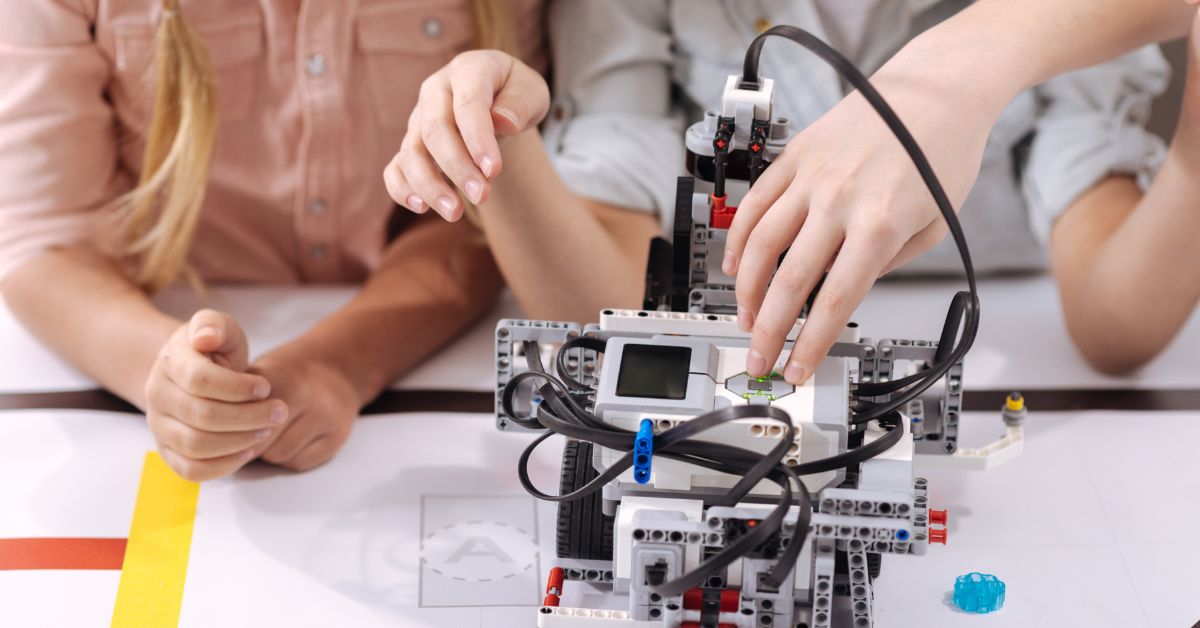
Coding is a modern day skill and people have different opinions on it. Some parents feel that you should not over stimulate your kid with challenging tasks which are not suitable for their tender age. Some introduce their kids to the basics of coding at a young age itself. Let’s look at what is an appropriate age for kids to learn coding.
The sooner, the Better
It is believed that kids should start learning how to code at an early age. Every kid develops and grows at a different pace and age but we can generally start teaching them from the age of 5-6 years. As kids are engaged in games so we can start off by introducing them to some logical games that would stimulate coding skills. Gradually we move on more complicated ones.
There are several articles and researches which indicate that kids who learn to code early from their elementary schooling itself achieve better performance on their academic front. Kids then in their later years of schooling or college can opt for the STEM (Science, Technology, Engineering, Math) subjects as they have an advantage of knowing about coding from a young age.
Deep logical Thinking
Parents usually plan for their kids in such a way that would lead them to greater heights and success. They work hard to land their kids in good and reputed colleges for a better future. They should also add coding to their bucket list as it will help their kid to think logically and in depth. Thinking creatively and critically should not be neglected but it should be considered equally important.

Coding provides an understanding of problem solving this will be an advantage not only professionally or academically but it will help in the daily life activities. A kid who starts to code approaches every problem with a solution-oriented approach.
This is a misinterpretation that one should go into coding only to be a competitive contender for jobs or higher studies instead the most important group for coding is children.
Coding enhances kids’ problem solving mindset which can be achieved through dedication and motivation. The core skill that kids grasp from coding is logic and reasoning which helps them to deal every situation of life.
Coding and bugs are best friends. So while learning coding one needs to deal with bugs too. When you write a code and form a program but it turns out that the result is not the one that you were expecting so, you need to go back to the original program and check it step by step. You need to research, explore and then find out where you went wrong. This will help your kid to find the logic behind every step and it will surely lessen the number to mistakes from next time.
Behind the Scenes
After knowing about the bug in your program the next step is to find out how one can avoid this from happening next time. This is to be taught and mentored to the kids for their future programs.
Today’s generation is being lullabied in the arms of technology. From the time they open their eyes in the morning to the time the close while sleeping at night; all kids are surrounded by technology. Parents fear the problem of addiction and behavioral changes due to technological influence but one cannot eliminate it from our present surrounding.
We all might know how a phone or a tablet works but how they exactly work is a whole new thing and that’s what Behind the Scenes is. Coding teaches kids how things work behind the scenes. With the help of coding related software, your kid would slowly know what powers an application, website or the other programs. With the usage of the information gained kids would work to recognize the poor design, faulty app and all the other fallouts. This will have a different perspective towards life. They will understand the problem and would find out the cause for the problem beneath the surface. This will enhance their cognitive skills which will eventually help the future of tomorrow.
Coding = Creativity
Every human wants an outlet for his creativity after spending a boring day at work and need it after spending hours at school. Everyone needs this opportunity to feel relaxed and calm. Kids who don’t really show their interest towards drawing, painting etc. can try out their capabilities at coding. Beginners can start working on developing apps, websites etc. which gives a sense of power of creation. This will build confidence and new skills in one.

Conclusion
The most appropriate age for children to start coding is from the early years of the elementary schooling like 5-6 years. This way they will sow the seeds at an early age and enjoy the fruits till many years.
Coding teaches logical thinking and problem solving which will benefit the kids in every stage of their life. Kids might opt for different careers in future but with basic knowledge of coding it will benefit them in their field too. So, start learning coding as early as possible with the multiple online academies or through any such medium.